Is your oven glass looking dull and grimy? Are you tired of seeing baked-on grease and stubborn stains every time you pop something in the oven?
I’ll be honest, I used to avoid looking directly at my oven door during the holidays. While I was busy baking cookies and roasting vegetables, that grimy glass would be right there, reminding me of all the splatters I’d been ignoring for months. But cleaning your oven door glass doesn’t have to be the dreaded chore you’ve been putting off!

We know cleaning your oven glass can feel daunting, but it doesn’t have to be! With our step-by-step guide, we’ll walk you through how to prep your oven and remove tough stains so you can restore that streak-free shine. Whether you’re dealing with light film or years of baked-on buildup, I’ve got you covered with simple solutions using products you probably already have at home.
Let’s get started on your journey to a cleaner and more beautiful oven glass that will make your mother proud! And without using a harsh chemical cleaner…
Why Your Oven Door Glass Gets So Dirty
Before we dive into the cleaning process, let’s talk about why oven door glass seems to attract so much grime. Understanding the problem helps us tackle it more effectively!
Every time you cook, tiny particles of grease and food splatter onto the glass surfaces. When exposed to high heat, these splatters essentially bake onto the glass, creating those stubborn brown and black spots that seem impossible to remove. It’s like the difference between wiping up a fresh spill versus trying to clean something that’s been cooked on—the heat changes everything.
High-heat cooking methods like broiling or roasting at temperatures above 400°F create even more splattering, which is why you might notice your oven door glass gets especially dirty after making bacon or roasting chicken. Add in the natural oils from foods and the moisture released during baking, and you’ve got the perfect recipe for grimy glass.
The good news? Once you understand what you’re dealing with, you can choose the right approach to cut through that buildup and prevent it from coming back so quickly.
What You’ll Need to Clean Oven Glass
Here’s what you’ll need to get started:
- Baking soda
- White vinegar
- Dish soap
- Glass cleaner
- Rubber gloves
- Microfiber cloths (I recommend having several on hand)
- Soft brush
- Plastic scraper
- Spray bottle
- Non-abrasive sponge
The beauty of this cleaning method is that you probably already have most of these supplies in your kitchen. No need for harsh commercial oven cleaners that fill your house with fumes—just simple, effective ingredients that work wonders on greasy glass surfaces.
Safety Tips Before You Start
Before you grab your supplies and dive in, let’s cover a few important safety considerations:
First and foremost, make sure your oven is completely turned off and cool to the touch. I know this seems obvious, but trust me—I’ve been too eager to start cleaning and burned my hand on a still-warm door. Give it at least an hour after use, or better yet, clean it when it hasn’t been used since the previous day.
Work in a well-ventilated area, especially when using vinegar. While it’s much gentler than commercial oven cleaners, the smell can be strong. Open a window or turn on your kitchen fan if you have one.
Wear rubber gloves to protect your hands, especially if you have sensitive skin. The baking soda paste can be drying, and you’ll be doing a fair amount of scrubbing.
Finally, keep your cleaning solutions away from the heating elements inside the oven. We’re focusing on the glass today, not the interior components!
Cleaning the Exterior: Getting Your Oven Door Glass Streak-Free
Let’s start with the easy part—the outside of your oven door glass. This is the surface that faces your kitchen, and thankfully, it’s the most straightforward to clean.
Preparing the Surface
Begin by ensuring the oven door is completely cool. Give it a quick wipe with a dry microfiber cloth to remove any loose dust or crumbs. This simple step prevents you from smearing dirt around when you apply your glass cleaner.
Applying Glass Cleaner for a Sparkling Finish
Grab your favorite glass cleaner and spray it generously over the outside glass. I like to work from top to bottom so drips don’t land on areas I’ve already cleaned. Using a clean, dry microfiber cloth, work in circular motions to wipe away the cleaner and remove any grime or fingerprints.
Here’s a little trick I learned: if you’re seeing streaks, you might be using too much glass cleaner. A light, even coating works better than heavy spraying.
Buffing for a Streak-Free Shine
Use another clean, dry microfiber cloth to buff the glass. This second pass removes any remaining cleaner residue and gives you that beautiful, streak-free shine. Stand at different angles to check for missed spots—the changing light will reveal any areas that need a little more attention.
For the exterior glass, this simple process should leave you with perfectly clear glass that looks brand new!
Tackling the Interior: Removing Baked-On Grease from Glass Surfaces
Now for the real challenge—the inside of your oven door glass where all that cooked-on grease lives. This is where our baking soda paste really shines (pun intended!).
Removing Loose Debris
Before applying any cleaning solution, remove loose debris or crumbs from the oven door glass using a dry microfiber cloth or a soft brush. This step helps prevent scratching the glass surface during the cleaning process. Pay special attention to the bottom edge where crumbs tend to accumulate.
Creating Your Baking Soda Cleaning Paste
Mix a paste using equal parts baking soda and warm water. The consistency should be similar to thick pancake batter—spreadable but not runny. This gentle combination works wonders on greasy glass surfaces without the harsh chemicals found in commercial oven cleaners.
I usually start with about half a cup of each and make more if needed. For really stubborn buildup, you can add a tiny bit less water to make the paste thicker.
Applying the Solution to Stubborn Stains
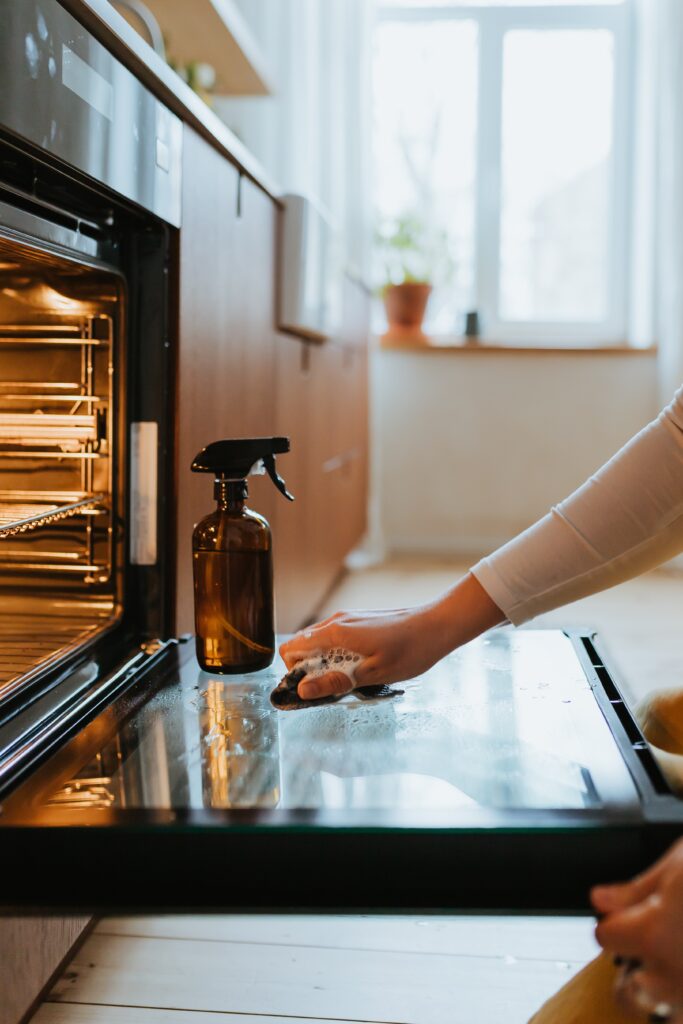
Apply the paste generously to the oven door glass using a cloth or sponge, paying extra attention to areas with heavy grease buildup or dark baked-on spots. Don’t be shy—you want a nice thick layer covering all the problem areas.
Let the paste sit for 15-20 minutes to penetrate the stains and grease. For particularly stubborn buildup that’s been there for months (or let’s be honest, years), you can leave it on for up to 30 minutes. I like to use this time to wipe down my stovetop or start on other kitchen cleaning tasks.
Scrubbing Away the Grime
After the baking soda has had time to work its magic, gently scrub the glass using a microfiber cloth or non-abrasive sponge. Use circular motions to loosen the grime, and you’ll start to see that brown residue lifting away. It’s oddly satisfying!
If any stubborn stains or baked-on grease remains, gently scrape them away with a plastic scraper. Hold the scraper at a 45-degree angle and use light pressure. Be careful not to apply too much pressure or use a metal scraper, as this can scratch the glass surface. If something isn’t budging, it’s better to reapply the paste and wait longer than to scrape aggressively.
The Vinegar and Dish Soap Finishing Touch
Here comes the fun part! Fill a spray bottle with equal parts white vinegar and water. Add a few drops of dish soap to the spray bottle and shake well to mix. This creates a powerful combination that cuts through any remaining grease while also neutralizing the baking soda.
Spray the solution generously onto the oven door glass, ensuring complete coverage over the baking soda paste. You’ll see it fizz and bubble—that’s the vinegar reacting with the baking soda, and it’s exactly what you want to see! This reaction helps lift away the last bits of grime.
Drying Without Streaks
Wipe away the paste and solution using a damp cloth or sponge, rinsing it frequently in clean water. You want to remove all the baking soda residue, which can leave a white film if left behind.
After successfully removing the grime and stains, use a spray bottle with clean water to rinse away any remaining paste or solution residue on the glass. Use a fresh, dry microfiber cloth to dry the glass, eliminating streaks or watermarks. Again, check from different angles to make sure you haven’t missed any spots.
Stand back and admire your work—the transformation is honestly pretty amazing!
Cleaning Between the Double Glass Panels
After you finish cleaning the inside and outside of your glass, you may find it still looks slightly dirty or hazy. If you’re seeing grime that won’t wipe away from either side, it’s time for the advanced move: cleaning between the oven door glass panels.
Understanding Your Oven Door Construction
Most modern oven doors have two or sometimes three layers of glass with an air gap between them. Over the years, grease particles and dust can work their way into this space, creating that frustrating hazy appearance that won’t clean off.
Consulting Your Manual
Here’s where I need to be honest with you: each oven door is different when it comes to disassembly. Some doors have screws that are easy to access, while others require you to remove the entire door from the oven first. I strongly recommend consulting your oven’s user manual for specific instructions. You should be able to find it online on the manufacturer’s website if you don’t have the physical copy.
General Disassembly Steps
While specific steps vary by brand and model, most oven doors follow a similar general process. You’ll typically need to remove several screws around the perimeter of the door, then carefully separate the glass panels. Some doors have clips or brackets that need to be released in a specific order.
Work on a stable surface like your kitchen table covered with a thick towel to protect both the door and your furniture. Take photos as you disassemble so you remember how everything goes back together—trust me on this one!
Cleaning the Inner Surfaces
Once you’ve separated the glass panels, clean the inner surfaces with the same baking soda paste and vinegar-and-dish soap solution we used on the inside glass. You might be surprised by how much accumulated grease and dust you find in there!
Dry everything thoroughly before reassembling. Any moisture trapped between the glass panels will create fog and water spots that defeat the purpose of your cleaning efforts.
When to Call a Professional
If you’re uncomfortable disassembling your oven door, or if the manual’s instructions seem overly complex, there’s no shame in calling a professional appliance technician. They’ve done this hundreds of times and can complete the job quickly and safely.
Troubleshooting Stubborn Stains and Buildup
Even with the baking soda and vinegar method, you might encounter some especially stubborn spots. Here’s how to handle them:
Dealing with Years of Buildup
If you’ve inherited an oven with years of neglect (no judgment—we’ve all been there!), you may need to repeat the baking soda paste process two or three times. Be patient and let the paste sit longer—up to an hour for extreme cases.
Handling Burnt Sugar and Cheese
Burnt-on sugar or melted cheese presents a special challenge because these substances caramelize and create an almost glue-like bond with glass. For these situations, apply your baking soda paste and let it sit for at least 30 minutes, then use your plastic scraper very carefully. You may need to soften stubborn spots with a cloth dampened in very hot water before scraping.
Addressing White Haze or Mineral Deposits
If your oven door glass has a white, cloudy appearance rather than brown grease, you’re dealing with mineral deposits from water or steam. For this issue, straight white vinegar works better than the diluted mixture. Apply it, let it sit for 10 minutes, then wipe clean.
Avoiding Damage to the Glass
Never use steel wool, metal scrapers, or abrasive cleaners like scouring powder on oven door glass. These will create permanent scratches that can’t be buffed out. Similarly, avoid using oven cleaner spray on the glass, as the harsh chemicals can damage the surface or create a cloudy appearance.
Maintaining Your Clean Oven Door Glass
Once you’ve achieved a sparkling clean oven door glass, you’ll want to maintain its pristine condition for as long as possible. The good news is that regular maintenance is much easier than deep cleaning!
Wipe Down After Each Use
After each cooking session, once the oven has cooled completely, quickly wipe down the oven door glass with a damp cloth or sponge. This prevents the buildup of grease and stains before they have a chance to bake on. It takes less than a minute and saves you so much work in the long run.
I keep a spray bottle of warm soapy water under my sink specifically for this purpose. A quick spritz and wipe after roasting vegetables or baking means I rarely have to do a deep clean anymore.
Choose Your Cleaning Tools Wisely
Stick to soft cloths and non-abrasive sponges for regular cleaning. Harsh chemicals and abrasive cleaning tools can scratch and damage the glass surface, making it more prone to future buildup. Think of it like this: micro-scratches in the glass create tiny grooves where grease can hide and accumulate.
Don’t Forget the Door Seals
Clean the oven door seals and gaskets regularly to prevent the accumulation of dirt and grime, which can affect the cleanliness of the oven glass. Food particles and grease can hide in these rubber seals, and during cooking, heat can cause them to release and settle on the glass.
Cover Dishes When Appropriate
When reheating saucy dishes or cooking foods prone to splattering, consider covering them with foil or a lid. This simple step prevents most splatters from reaching your oven door glass in the first place.
Frequently Asked Questions About Cleaning Oven Glass
How often should I clean my oven glass?
The frequency of cleaning your oven door glass depends on your cooking habits. As a general guideline, give it a quick wipe-down after every few uses and do a deep clean at least once every few months. However, if you start to notice significant buildup or stains, it’s best to clean it sooner. I find that cleaning it thoroughly with each season change works well for my cooking habits.
Can I use commercial oven cleaner on the glass?
Most commercial oven cleaners are not recommended for use on oven door glass as they can damage the glass surface or leave a cloudy film. The harsh chemicals in these products are designed for the interior oven surfaces, not glass.
Can I use a razor blade to clean my oven glass?
Using a razor blade on oven glass is not recommended, as it can easily scratch and damage the surface. Instead, opt for a plastic scraper specifically designed for cleaning glass. These scrapers are firm enough to remove stubborn spots but won’t create permanent scratches like metal tools can.
How can I prevent streaks on my oven glass?
To prevent streaks, thoroughly rinse the glass with clean water after cleaning, then dry it with a lint-free microfiber cloth. The key is to remove all residue from cleaning products. I also find that buffing with a dry cloth in a circular motion, then finishing with straight vertical strokes, gives the most streak-free results.
How do I clean between the oven door glass panels?
Cleaning between double glass panels requires disassembling the oven door. Consult your oven’s user manual for specific instructions, as each model is different.
What causes white haze on oven glass?
White haze or cloudy spots on oven glass are typically caused by mineral deposits from water or steam, especially if you live in an area with hard water. This can also happen if you frequently use steam-cleaning features. To remove it, apply straight white vinegar, let it sit for 10 minutes, then wipe clean with a soft cloth.
How do I remove melted plastic from oven glass?
If plastic has melted onto your oven door glass, wait until it has cooled and hardened completely, then carefully scrape it away with a plastic scraper. You can soften stubborn residue by applying a cloth dampened with very hot water for a few minutes before scraping. Follow up with baking soda paste to remove any remaining residue or discoloration.
How to Clean Oven Glass, The Right Way
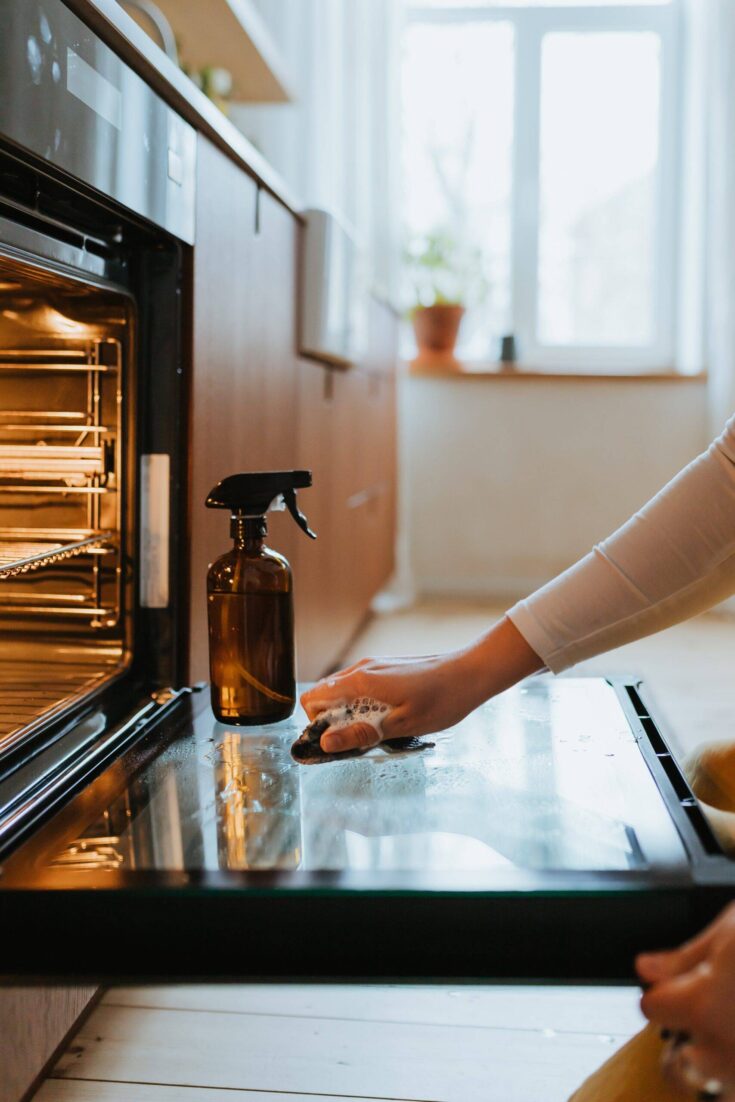
With just a few simple supplies you can get your oven glass to sparkle, inside and out!
Materials
- Baking soda
- Vinegar
- Dish soap
- Glass Cleaner
Tools
- Rubber gloves
- Microfiber cloths
- Soft brush
- Plastic scraper
- Spray bottle
- Non-abrasive sponge
Instructions
How to Clean the Outside Oven Glass
- Before cleaning the glass, ensure the oven is completely turned off and cool.
- Grab your favorite glass cleaner and spray the outside glass.
- Using a clean, dry microfiber cloth, work in circular motions to wipe away the cleaner and remove any grime.
- Use another clean, dry microfiber cloth to buff the glass.
How to Clean the Inside Oven Glass
- Before cleaning the glass, ensure the oven is completely turned off and cool.
- Remove any loose debris or crumbs from the oven glass using a dry microfiber cloth or a soft brush. This step helps prevent scratching the glass surface during the cleaning process.
- Mix a paste using equal parts baking soda and water. Apply the paste to the oven glass using a cloth or sponge.Let the paste sit for 15-20 minutes to penetrate the stains and grease.
- Gently scrub the glass using a microfiber cloth or non-abrasive sponge using circular motions to loosen the grime. If any stubborn stains or baked-on grease remains, gently scrape them away with a plastic scraper. Be careful not to apply too much pressure or use a metal scraper, as this can scratch the glass surface.
- Fill a spray bottle with equal parts white vinegar and water. Add a few drops of dish soap to the spray bottle and shake well to mix.
- Spray the solution onto the oven glass, ensuring complete coverage on the baking soda paste.
- Wipe away the paste and solution using a damp cloth or sponge.
- After successfully removing the grime and stains, use a spray bottle with clean water to ensure no paste or solution residue remains on the glass. Use a fresh microfiber cloth to dry the glass, eliminating streaks or watermarks.