Keeping your scissors in top shape is crucial for smooth and accurate cuts, whether you’re crafting, cutting fabric, or tackling everyday tasks.
Luckily, learning how to sharpen scissors at home is straightforward and cost-effective. In this guide, we’ll walk you through five easy methods using items you probably already have around the house.

From sandpaper to glass jars, these techniques are not only simple but also effective. So grab your dull scissors, and let’s get started on making them sharp again!
So let’s dive in, shall we?
Navigate This Post
Sharpen Scissor Using Sandpaper
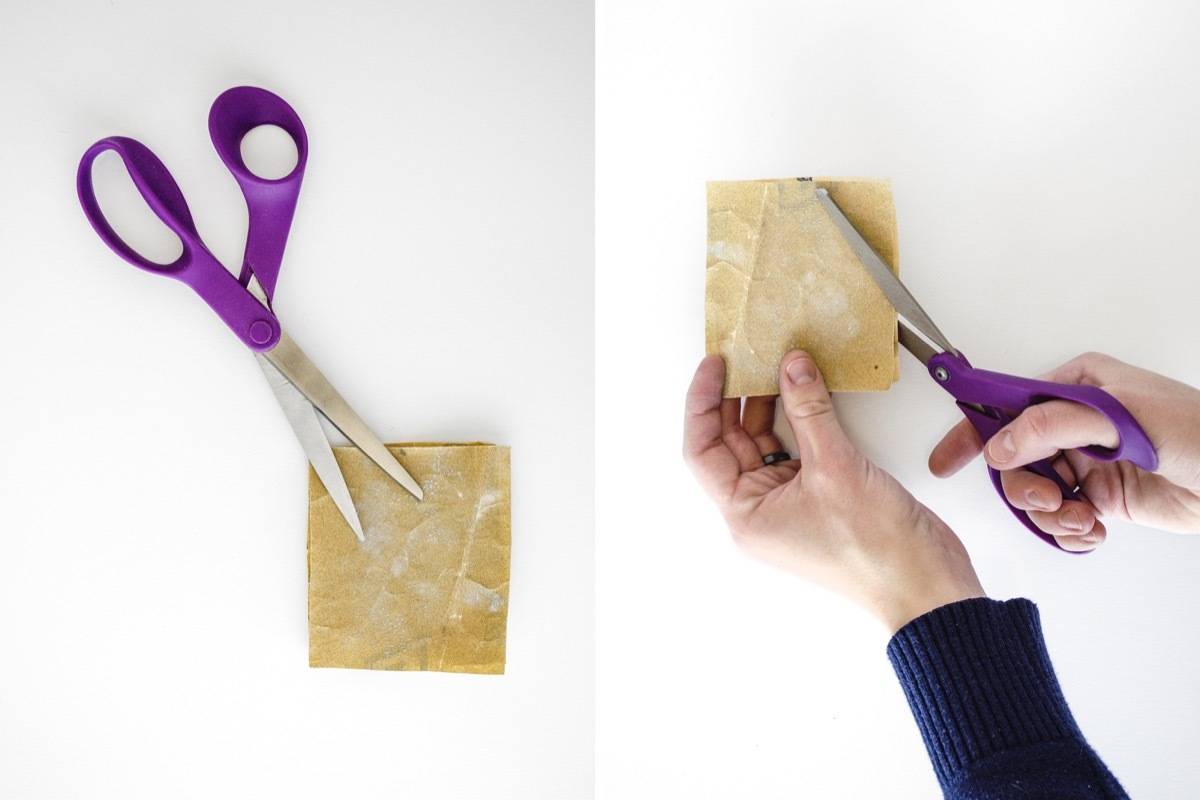
One of the easiest and most accessible ways to sharpen the blades of your scissors is by using sandpaper. You’ll want to grab a piece of medium-grit sandpaper, ideally in the 150 to 200 grit range.
Start by cutting the sandpaper into manageable strips. This way, you can comfortably handle the strips while ensuring the entire blade gets sharpened.
Hold your scissors with the blades open wide. Now, gently cut through the sandpaper several times. It’s crucial to use light pressure as you cut, ensuring that each pass sharpens the edges without causing any damage.
After you’ve made a few cuts, take a moment to check the sharpness of your scissors. If they still feel dull, continue the process a few more times.
Once you’re satisfied with the sharpness, wipe the blades clean with a damp paper towel or cloth to remove any sandpaper residue or debris that may have accumulated during the sharpening process.
Remember, always keep your fingers away from the blades and make sure you’re working on a stable surface to avoid any mishaps. This simple technique can breathe new life into your dull scissors in no time.
Sharpening Scissors With The Sharpening Stone Technique
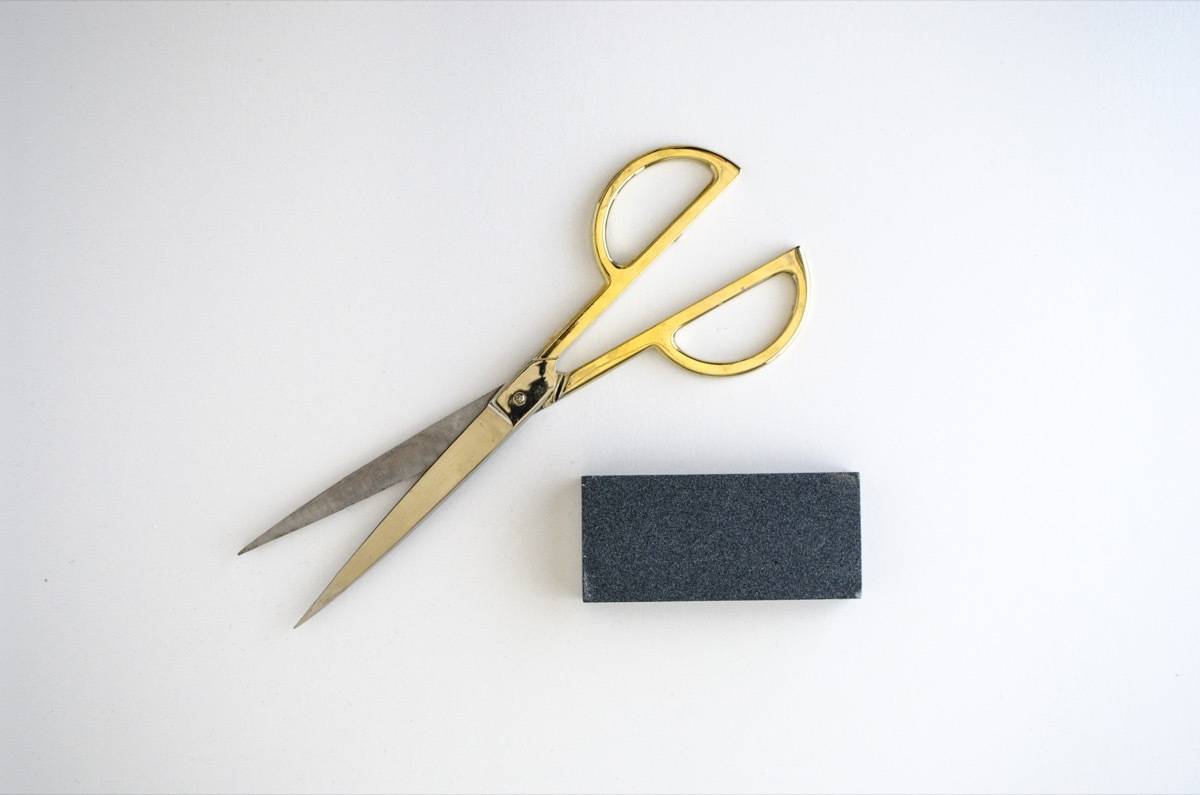
Using a sharpening stone is a fantastic way to restore those scissors to their original shape, especially if they’re quite dull. Here’s how you can do it:
First, grab your sharpening stone and hold it securely in one hand. In the other hand, hold the scissors, and open them up so you can work on one blade at a time.
Place the beveled edge of the blade against the stone, aiming for about a 10-15 degree angle. This angle is important because it matches the original edge of your scissors.
Now, glide the blade across the stone. Start from the pivot point (the part closest to the handle) and move towards the tip. Ensure that you maintain that angle as you slide the blade.
You’ll want to repeat this motion about 10-15 times for each blade. This might take a bit of practice, but you’ll get the hang of it!
Remember not to apply too much pressure; a gentle touch is all that is needed. Excessive force can damage the blade, and we want to avoid that.
Once you’ve finished with both blades, take a damp cloth and wipe them clean. This removes any tiny metal particles left from the sharpening process.
By following these steps, you’ll have a reliable method to keep your scissors sharp and ready for action.
Aluminum Foil Method For Sharpening Scissors
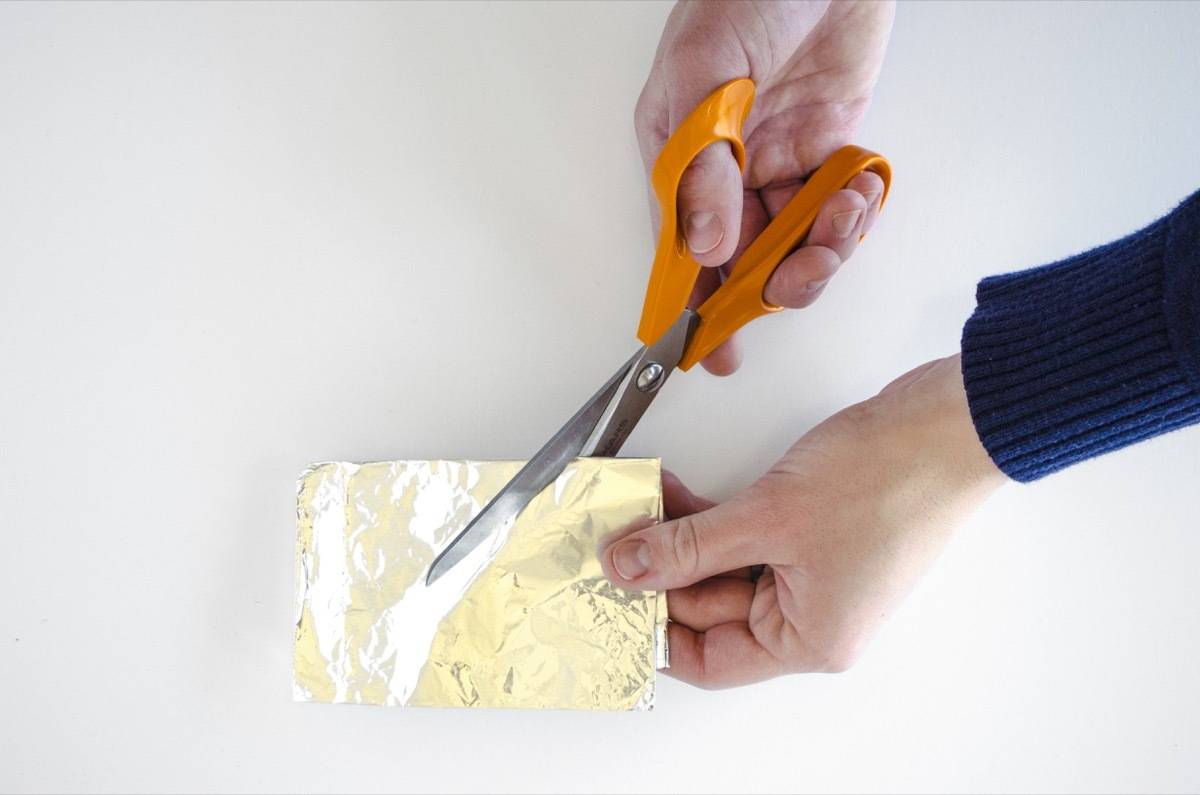
The aluminum foil method is both quick and super simple.
Start by tearing off a piece of aluminum foil that is approximately 12 inches long. Then, fold the foil multiple times until it’s several layers thick. This added thickness will provide the right resistance for sharpening.
Next, use your scissors to cut the foil into strips. Be sure to cut from the pivot all the way to the tip for the best results.
After a few cuts, you should notice an improvement in sharpness. Test your scissors on a piece of paper or fabric to see if they’re up to snuff. If they still feel a bit dull, just grab another piece of foil and repeat the process.
This method works great for light sharpening and general maintenance. However, if your blades of the scissors have deep nicks or are extremely dull, you might need to try another technique or repeat this one a few more times.
Don’t forget to wipe down the blades with a damp cloth after you’re done. This will remove any small bits of foil that might be clinging to the blades.
Using a Glass Jar To Sharpen Your Scissors
Did you know you can use a glass mason jar to sharpen your scissors? It’s a neat little trick! Here’s how to do it:
First, grab a glass mason jar from your kitchen. Open your scissors wide and place one blade against the side of the jar. With light pressure, slide the blade from the base to the tip along the glass surface.
You’ll want to repeat this motion about 10-15 times for each blade. The abrasive nature of the glass will help to sharpen the edge effectively.
After a few passes, check the sharpness of your scissors by cutting a piece of paper or fabric. If they’re still not quite sharp enough, repeat the process a few more times until you’re happy with the results.
Once you’re done sharpening, wipe down the blades with a damp cloth to remove any tiny glass particles that might have stuck to them. This ensures your scissors are clean and ready for their next task. This method is easy, quick, and uses an item you likely already have at home.
Sharpen Your Scissors With The Needle or Pin Technique
If you’re looking for a quick touch-up for your scissors, the needle or pin technique might be just what you need. This method is ideal for giving your blades a sharper edge with minimal effort.
First, find a needle or pin that you have lying around. Open your scissors as wide as they’ll go and position the needle near the pivot point of the blades.
Now, gently close the scissors so the needle is caught between the blades. Apply light pressure and start to cut, moving the needle towards the tip as you close the scissors. This motion helps hone the edges of the blades.
Repeat this process a few times for each blade to ensure both sides are evenly sharpened. The constant contact with the needle works similarly to a honing rod used for knives, aligning the edges and making them sharper. This technique works well for various types of scissors, including kitchen scissors and small crafting ones.
One thing to keep in mind is that this method is best for minor touch-ups rather than serious sharpening. If your scissors are very dull or have deep nicks, you might want to try one of the other methods we’ve discussed or consider using a sharpening stone for a more thorough job.
Once you’re done, give your scissors a quick wipe with a damp cloth to remove any metal particles left from the honing process. And there you have it—a simple, efficient way to keep your scissors in good working condition!
Frequently Asked Questions
How often should I sharpen my scissor blades?
The frequency really depends on how much you use them. For occasional use, every few months should do the trick. If you’re constantly cutting through materials, sharpening the dull blades once a month might be necessary.
Can these methods work for all types of scissors?
Most household scissors will benefit from these techniques. However, if you have specialized scissors, like those used for hair cutting, it’s best to seek professional help for sharpening to avoid any damage.
What should I do if my scissors are still dull after trying these methods?
If you’ve tried these methods and your scissors still don’t have sharp edges, it may be time to consult a professional. Sometimes the blades are just too worn or damaged, and they might need a more thorough sharpening than you can achieve at home.
Is it normal for some methods to take longer than others?
Yes, different methods have different levels of effectiveness based on the condition of your scissors. Sharpening stones, for instance, can take a bit longer but are very effective for very dull scissors, while aluminum foil is quicker for light sharpening.
Do I need any special skills to sharpen my scissors at home?
Not at all! The methods we’ve shared are easy and don’t require any special skills. Just follow the steps carefully, have patience, and you’ll have sharp scissors in no time.
A Few Final Thoughts on How to Sharpen Scissors
Mastering the art of sharpening scissors at home is both satisfying and practical.
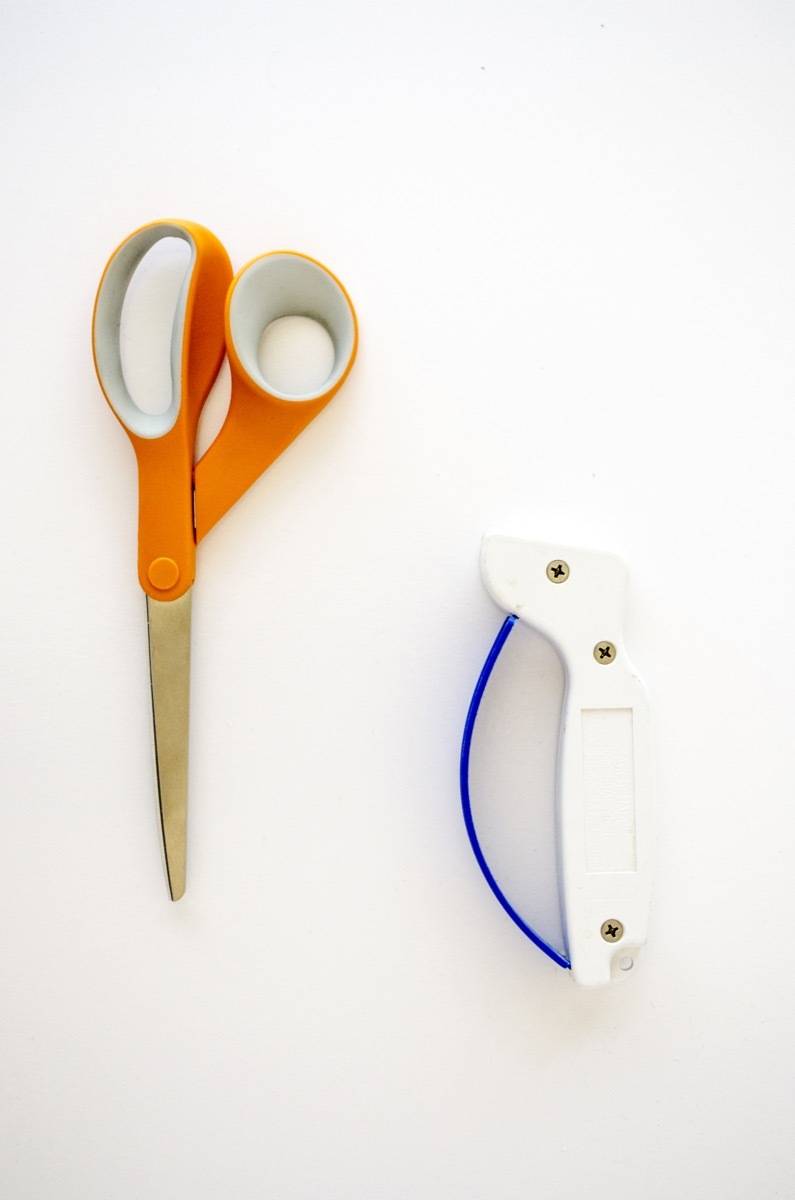
With a range of methods like using sandpaper, a sharpening stone, aluminum foil, a glass jar, or even a needle, you can easily restore your scissors to their former glory. These techniques don’t require any special skills and use items you probably already have around the house.
Remember to be patient and gentle during the process to avoid any damage to the blades. Safety is key, so always handle your tools with care.
Whether you’re an occasional crafter or someone who relies on scissors daily, keeping them sharp will make all your cutting tasks much easier and more efficient. Happy sharpening!


If you still need help deciphering the sharpening instructions, I recommend going to your local woodworkers’ supply and looking into sharpening info. My husband’s knowledge of sharpening is mostly limited to plane blades and chisels (gleaned from Mr. Lee’s – yes, that Lee – excellent book). However, when he looked at your instructions, he instantly understood how it was done and could show me.
I believe the book also has a reasonable amount of discussion on oil stones vs water stones, and which to use and sourcing each of them.
@Charlene I don’t see why not!
Was very interesting , you can learn new things every day. Ha Ha I really enjoyed reading this because I live in an area that don t have a place to have your hairstyling scissors sharpened , I have to either send them out or have to have someone come to me .
So for that I say thank you